Over the past few years, I’ve led teams through significant organisational change, including moments of rapid transition and uncertainty. Those experiences sharpened my perspective on leadership: sustaining motivation and morale matters just as much as craft excellence.
This case study captures the strategies and principles I applied to strengthen a design team during a period of growth and transition, while maintaining quality, resilience, and trust.
Approach
My leadership approach centers around three principles:
- Empowerment through clarity: Give designers autonomy, but ensure they understand expectations, goals, and accountability.
- Communication as a craft: Treat communication with the same regard as design craft; it’s key to alignment and influence.
- Transparency builds trust: Especially during uncertainty, honesty and open dialogue sustain morale more than polished messages ever could.
With these principles in mind, I focused on creating systems and rituals that fostered growth, supported communication, and strengthened team cohesion.
Initiatives and Actions
1. Building culture through rituals
1:1s, retrospectives, and planning sessions
I established consistent touchpoints to maintain alignment and trust. Weekly 1:1s provided space for personal support and feedback; monthly retrospectives and planning sessions gave the team time to reflect on what worked, what didn’t, and what we’d change next.
These weren’t just meetings, they became spaces of psychological safety where people could speak openly about challenges and celebrate progress.
Weekly design reviews
Design reviews helped maintain quality and strengthen the team’s feedback muscle. They created shared ownership of our design standards and helped designers grow confidence in giving and receiving critique.
Team building and growth mindset
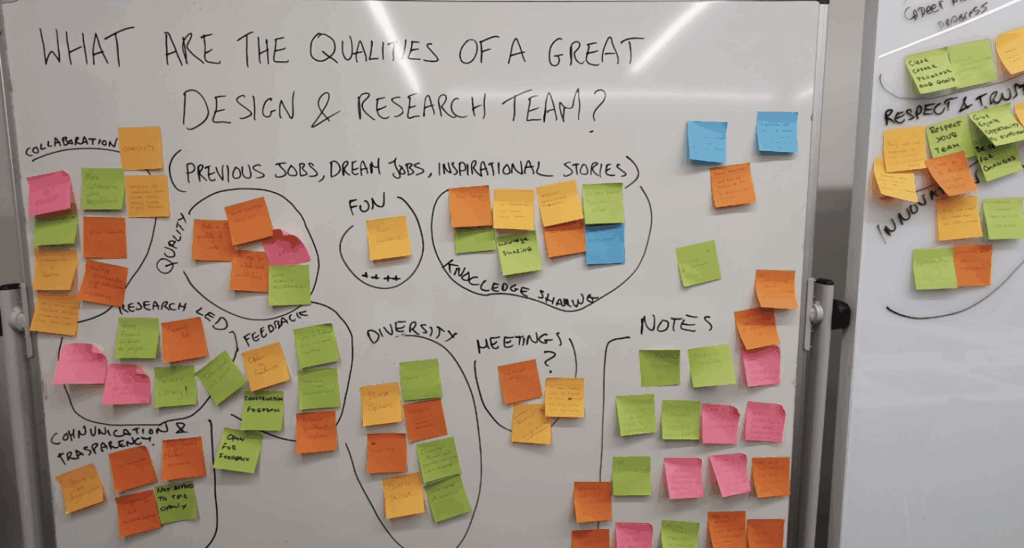
Quarterly offsites, creative sessions and informal events helped motivation, support and peer learning. These moments built trust and emotional resilience, critical for navigating periods of organisational change. When facilitating these sessions, it was important to help shape the conversation so that we left with positive and actionable items within our control. The creative sessions were opportunities to explore innovation which surfaced lightbulb moments and grew confidence within the team.
2. Empowering growth and communication
Peer mentorship and buddy sessions
To encourage cross-level learning, we created a peer buddy system. Junior designers were paired with more senior teammates to exchange feedback, shadow collaboration moments, and learn how to communicate design intent effectively.
Communication training
Recognising communication as one of the most challenging soft skills, I partnered with external experts to run annual workshops on storytelling and presentation. I supported designers putting these skills into practice by sharing their work with cross-functional partners and executives.
Career growth and check-ins
I held structured career-level check-ins and regular feedback loops. These helped designers understand their trajectory, align their goals with business needs, and avoid surprises during promotion and compensation discussions.
3. Designing for visibility and alignment
Design planning and progress tracking
Each designer created project plans outlining milestones and collaboration points with engineering and product partners. Once a month, we held planning reviews where designers shared upcoming initiatives and reflected on progress from the previous month.
To bring more visibility to in-progress work, we introduced a bi-weekly Jira-based check-in. This allowed us to track capacity, priorities, and blockers, improving resource allocation and transparency across teams.

4. Scaling the team thoughtfully
When I took over the team it was small and still forming. Over the next year, I expanded it thoughtfully across different levels to balance mentorship and expertise.
Each designer was embedded into a cross-functional pod, a deliberate choice to ensure they had end-to-end ownership and context in their work. As the scope of work evolved, we transitioned from a pod embedded model to a service oriented model to better support a broader set of initiatives..
Hiring process
I developed a structured hiring process that included recruiter screening, manager interview, portfolio presentation, and a collaborative workshop. The full process took about five hours, and even candidates who didn’t move forward shared positive feedback on the experience.
5. Creating opportunities for emerging talent
I launched the first Design Internship Program in Dublin. Collaborating with HR, we designed a program that paired interns with senior mentors for small but meaningful projects.
The first intern successfully led a project involving stakeholder collaboration, workshop facilitation, and engineering alignment. Their performance was so strong that we extended their internship and later proposed a full-time role. This initiative not only built early-career opportunity but also gave senior designers valuable leadership experience.
5. Challenges and How I Addressed Them
Performance coaching
At times, junior designers needed additional structure to meet expectations. I implemented a coaching framework paired with senior mentorship, which led to measurable progress. The additional support helped clarify expectations and created measurable improvement. This learning was important as it highlighted the need to ensure the guidance and support is there for junior members.
Organisational Changes
After a major organisational shift, morale and trust were naturally affected. The biggest challenge wasn’t productivity, it was trust. I led open conversations about the “why” behind the changes, acknowledged the uncertainty, and refocused our energy on what we could control. This transparency helped the team slowly rebuild confidence and unity.
Adapting to organisational change
As the organisation matured, new processes and reporting structures introduced complexity and adjustment challenges. I encouraged the team to surface frustrations early, turning those conversations into feedback loops with leadership. By framing change as a chance to grow influence, we gradually built adaptability into our culture.
6. Results
Sustained quality: Weekly design reviews and planning rituals improved design consistency and accountability.
Improved communication: After workshops and practice opportunities, designers reported greater confidence in presenting to stakeholders and executives.
Growth and retention: Designers progressed within levels, and internal feedback reflected higher engagement and clarity around growth.
Culture resilience: Despite significant organisational change, the team maintained collaboration and trust, reflected in post-RIF pulse surveys and team feedback sessions.
Intern success: The design internship program became a repeatable framework for growing early-career talent.
Key Learnings
- Transparency outperforms perfection. Open conversations, even when answers are incomplete build far more trust than polished but opaque communication.
- Systems sustain culture. Rituals like reviews, check-ins, and retros create a predictable rhythm that supports morale and momentum.
- Tailor leadership to experience. Senior designers thrive with autonomy; junior designers need structure. Knowing when to step back or step in defines team health.
- Design leadership is people leadership. Great design outcomes follow when designers feel seen, supported, and trusted.
Reflection
Leading through uncertainty reinforced that design leadership isn’t just about craft, it’s about care, clarity, and consistency.
Building a great team isn’t only about hiring the right people; it’s about sustaining their motivation when things are hardest. What mattered most wasn’t the tools or processes, but the shared belief that even in change, we could grow together, stronger, clearer, and more resilient.