Introduction
When I joined the organisation, our teams were moving quickly but not always in the same direction. Product, design, and engineering each had strong practices, yet lacked a shared framework that connected discovery, delivery, and measurement. Without a clearly mapped process, teams faced misalignment, communication gaps, and uncertainty about ownership and progress.
As a design leader, I saw an opportunity to bring clarity, connection, and consistency across disciplines. I led a cross-functional initiative to redesign our software development lifecycle (SDLC) with product and engineering leaders. We transformed it from a set of ad-hoc steps into a cohesive, living framework that improved alignment, velocity, and transparency across the organisation.
This case study outlines how I approached this challenge, what we learned, and how the redesigned process became a foundation for collaboration, efficiency, and continuous learning.
Approach and Discovery
To ensure lasting change, we focused on co-creation rather than prescription. Our goal was to design a process with the people who use it empowering teams to shape how they work, rather than imposing structure from above.
Workshop Objectives
- Capture how different disciplines planned, delivered, and reviewed work.
- Build a unified product-process map to improve visibility and communication.
- Establish consistent terminology and expectations across teams.
- Align the documented SDLC with how work actually happens.
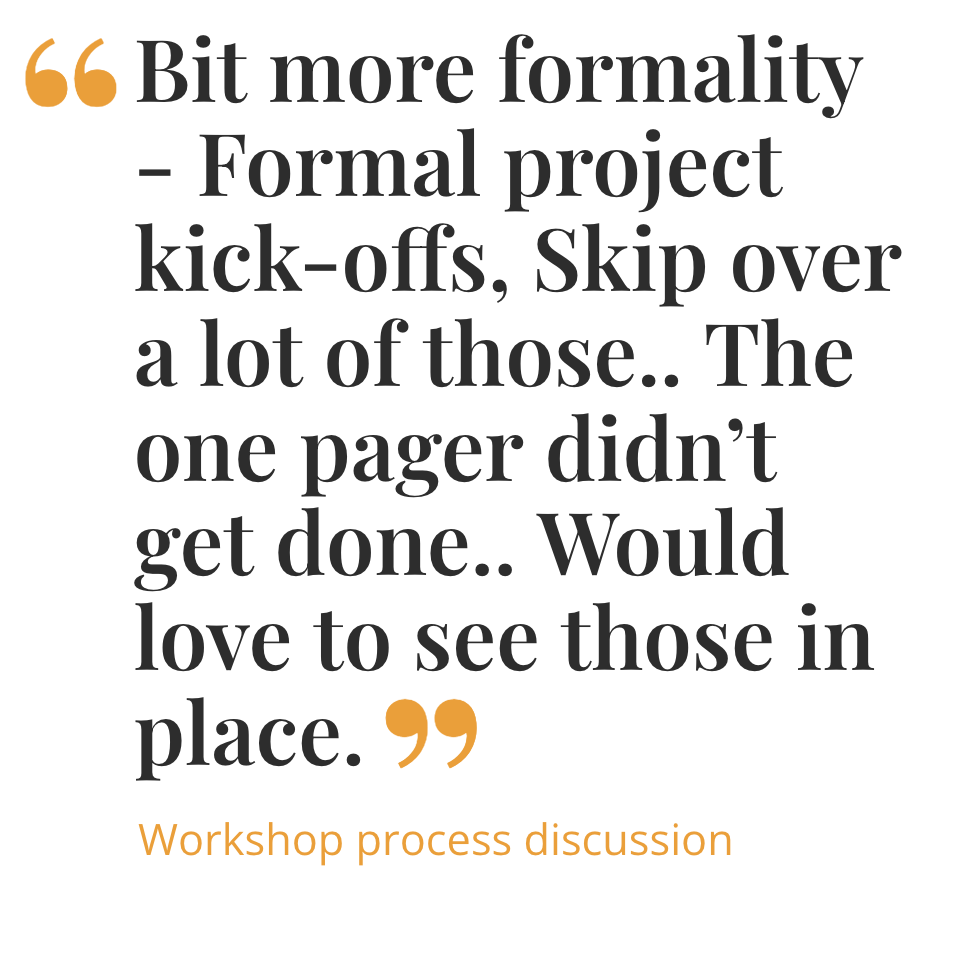
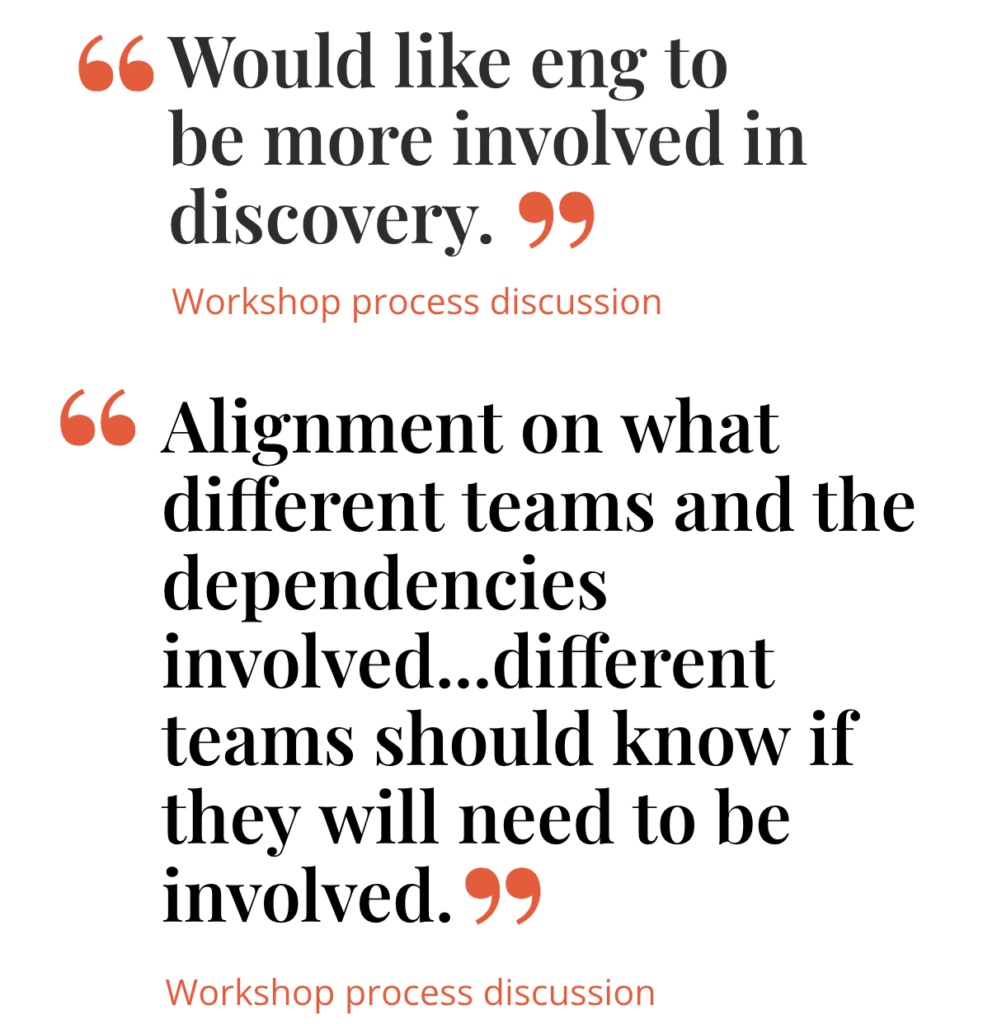
The sessions revealed common challenges: inconsistent project sizing, unclear milestones, missing kick-offs, and uncertainty about ownership. Despite varied perspectives, everyone shared the same goal to make collaboration easier and progress more predictable.
Redesigning the Product Process
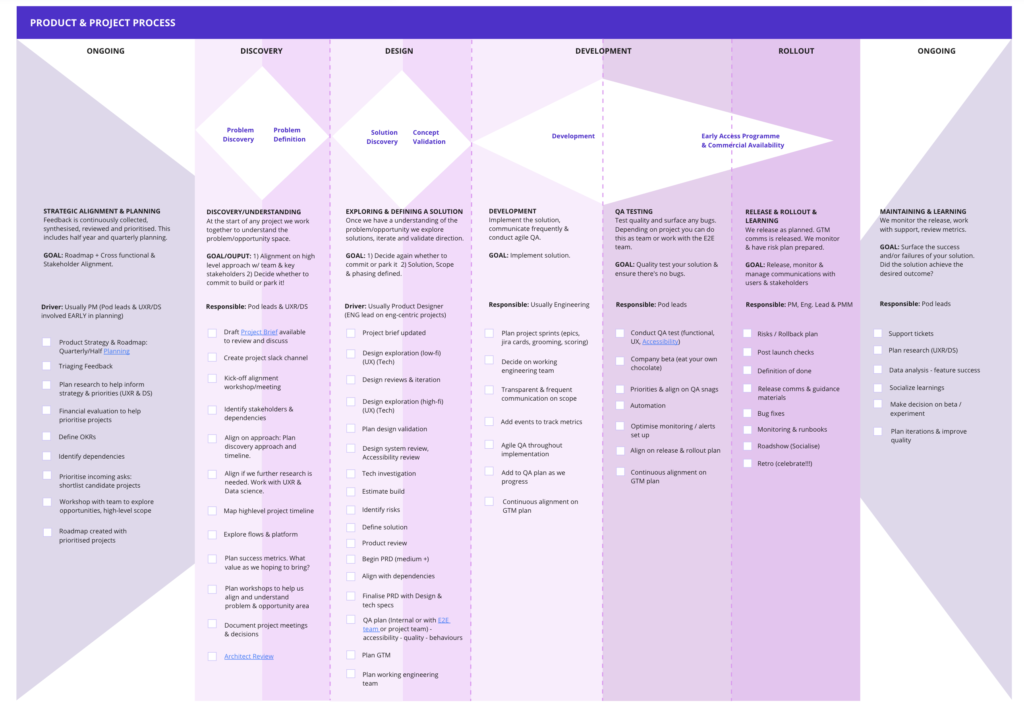
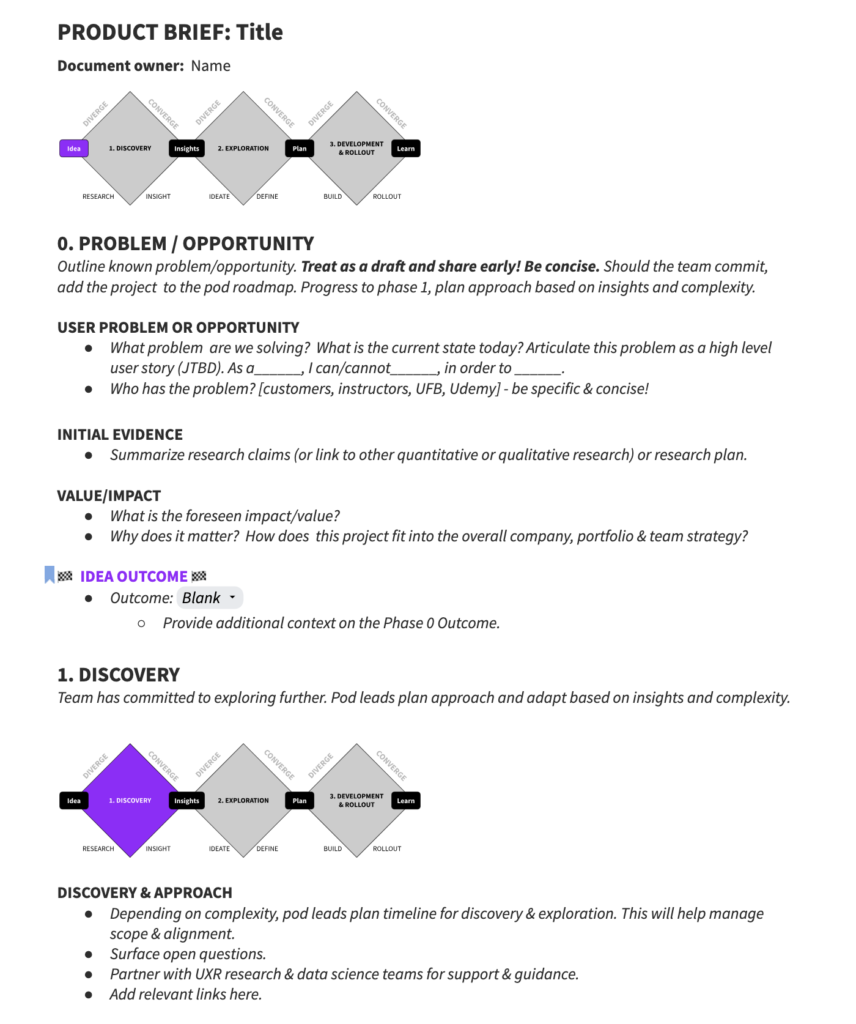
Once insights were synthesised, we created a visual map outlining six key phases of work:
- Discovery / Understanding: exploring the problem space and aligning on context.
- Exploration / Definition: generating and refining potential solutions.
- Development: building and validating the chosen direction.
- QA Testing: ensuring quality and readiness for release.
- Release & Rollout: deploying to users with the right communication and support.
- Maintenance & Learning: gathering feedback and deciding when to iterate or retire.
We documented the process in our internal wiki, produced a concise cheat sheet, and integrated it into onboarding materials. By linking it to our quarterly planning cycles and OKR process, the SDLC became a living reference a shared foundation for how teams deliver together.
Iterating and Improving
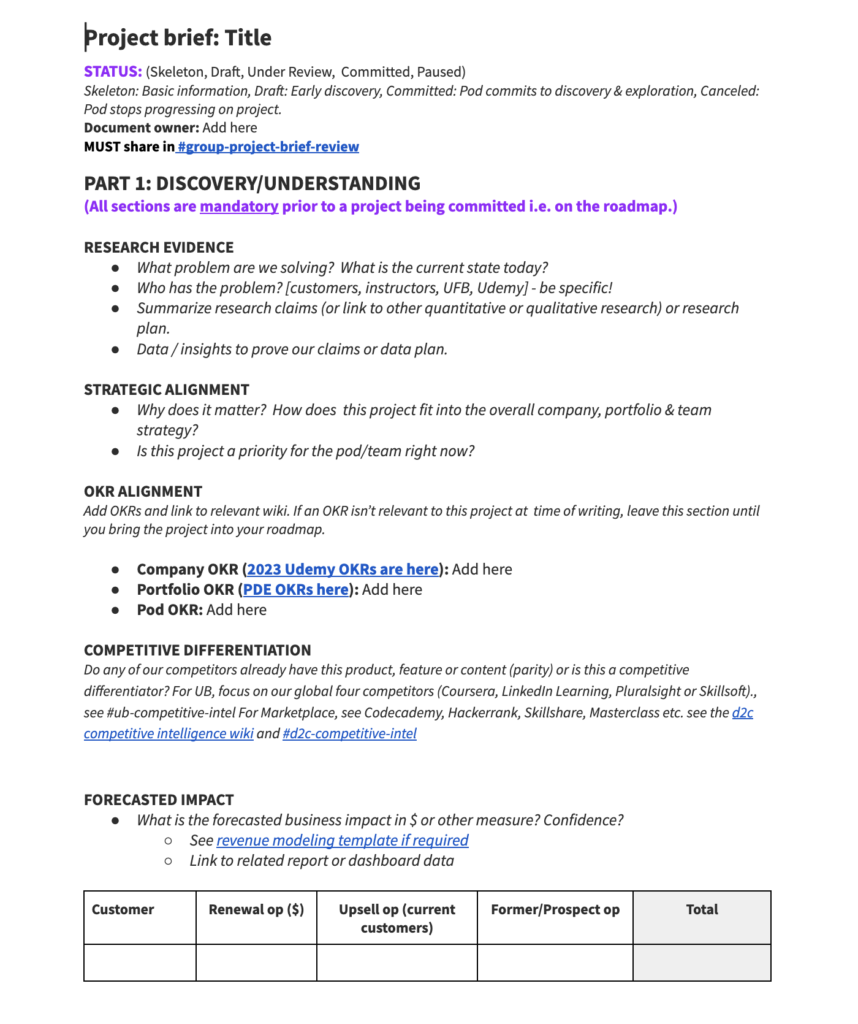
One of the biggest pain points raised during workshops was the “One Pager” template used for project documentation. It was inconsistent and often duplicated effort.
Working with product and engineering leadership, we redesigned the template to merge three existing artefacts into a single, clearer document. The update simplified communication and made it easier for teams to stay aligned.
As adoption grew, we continued to gather feedback and iterate. Each revision made terminology clearer and guidance more actionable. Over time, this rhythm of feedback and refinement became part of the culture reinforcing continuous improvement and shared ownership.
Challenges and Lessons Learned
Process redesigns rarely succeed through documentation alone. Early on, we realised that maintaining alignment required ongoing governance, regular check-ins, and a dedicated forum for reflection and iteration.
The SDLC is a living framework, it evolves as teams, tools, and leadership change. As new leaders join and bring their perspectives on how product and engineering should operate, the process must adapt accordingly.
The key lesson was to plan for scale and iteration from the start, ensuring documentation, rituals, and ownership models can evolve without losing clarity or momentum.
Key Learnings
- Designing process is designing culture. Alignment happens through conversation, not checklists.
- Shared ownership drives adoption. Involving teams in design built engagement and trust.
- Iteration keeps it relevant. The SDLC must evolve with product maturity.
- Clarity fuels velocity. The more clearly we define milestones and responsibilities, the faster teams can move.
Impact
- 57 cross-functional participants co-created the new SDLC framework.
- Clearer roles and vocabulary reduced ambiguity and improved accountability.
- Unified templates simplified communication and shortened onboarding time.
- Aligned planning cycles improved predictability and delivery confidence.
- The initiative became a model for continuous improvement and design-ops maturity across the organisation.
Conclusion
This initiative shifted how our teams collaborate and plan. By co-creating a shared SDLC, we built clarity where there was uncertainty and replaced friction with forward momentum. The process empowered teams to take ownership of delivery, improved transparency, and strengthened trust across disciplines.
As a design leader, this experience reinforced that operational design is a form of leadership. Building alignment and velocity isn’t about enforcing rules, it’s about creating the conditions for people to do their best work. Through structure, empathy, and iteration, we turned process design into a catalyst for scale and collaboration.