Introduction
When our team set out to build the Learning Paths experience for Udemy Business, we began with an ambitious but undefined goal: help teams curate and scale learning within their organisations.
There was no existing model in the product and no clear consensus on scope or approach. My role as design lead was to create clarity to define a vision, align stakeholders, and lead a user-centred strategy that would allow the team to move quickly and confidently from uncertainty to launch in 6 months.
This case study shares how I applied design strategy to guide a complex initiative combining design thinking, rolling research, and collaborative facilitation to deliver a high-impact feature that became a cornerstone of the B2B learning platform in a short amount of time.
Strategic Challenge
The challenge was to define what a “learning path” should mean within our ecosystem, and to design a scalable experience that balanced user needs with business goals.
At the outset, we lacked shared definitions, customer insights, and technical precedent. The risk was building something too narrow to serve enterprise clients or too broad to execute effectively.
My focus was to establish strategic alignment through design using research and facilitation to turn ambiguity into a shared direction for product, design, engineering, and marketing.
UX Strategy
I structured the approach around a design thinking framework ensuring we gathered the right insights, aligned stakeholders, and grounded decisions in customer value.
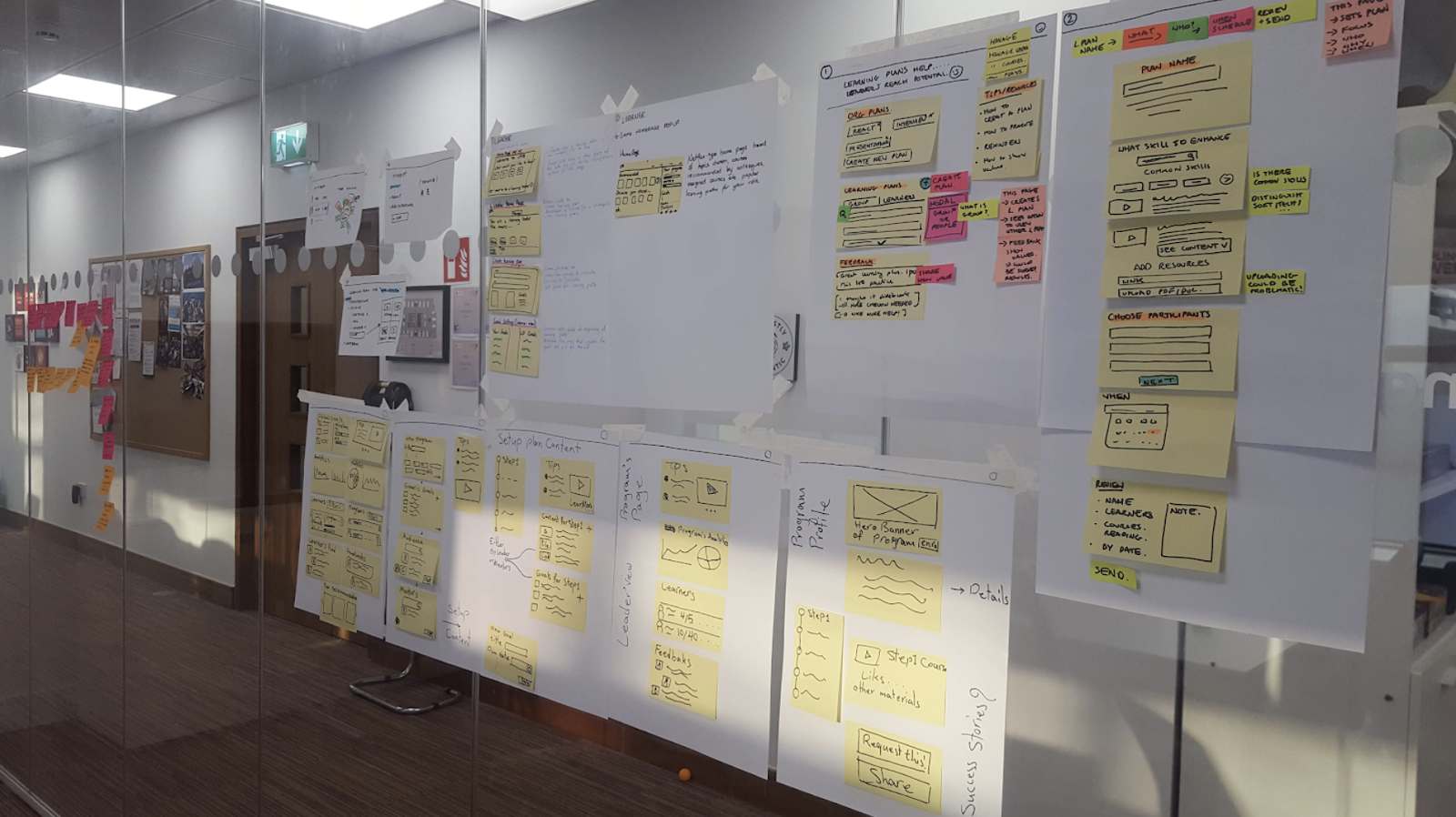
The process combined a tailored design sprint with ongoing research and validation. I brought together key stakeholders from product, engineering, research, marketing, and customer success for a week-long collaborative sprint. This format accelerated decision-making and helped transform a loosely defined idea into a clear, testable vision.
Over the six-month project, we followed a double diamond approach, moving iteratively through discovery, definition, design, and delivery. Each phase integrated research and validation with engineering involved throughout to align feasibility and design intent.
Rolling Research and Validation
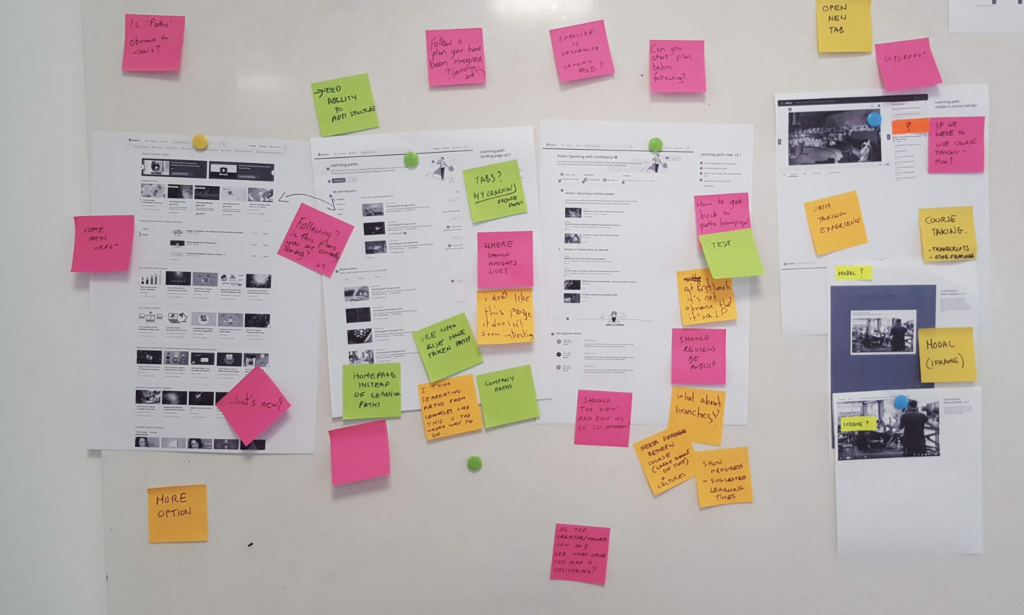
Maintaining empathy for our users was a core principle throughout. To reduce risk and build confidence, I ensured a rolling research cadence with customer interviews and usability tests, enabling us to continuously refine designs and integrate new insights into our evolving vision.
I encouraged participation from the wider team through an observation room, helping to spread knowledge and deepen our collective understanding of customer needs.
Working with our UX research partner, we interviewed 14 enterprise customers, exploring their workflows and goals around learning curation. This provided a broad view of organisational needs and helped us validate direction at every step.
Continuous feedback loops allowed us to refine the information architecture, simplify the path-creation flow, and improve discoverability. Through targeted usability testing, we fine-tuned how users built and shared learning paths — ensuring the experience felt intuitive, scalable, and aligned with real-world learning practices.
“So basically, you just described everything I want to do but in a nice packaged way — less clunky than what I use.”
— Udemy Business Customer(Customer feedback excerpt from early validation interviews.)
Build and Go-to-Market
I partnered closely with engineering to deliver a robust, accessible, and high-quality experience. The Learning Paths release introduced several key capabilities:
- Creating and curating multi-content learning paths.
- Setting governance controls for visibility (public, private, or group-specific).
- Adding portions of courses and mixed content types for greater flexibility.
Each feature underwent rigorous QA testing across devices and browsers, with a strong focus on accessibility and responsive design.
To support the launch, I commissioned an illustrator to develop a cohesive illustration system that visually defined the Learning Paths identity across product and marketing. I worked closely with product marketing and product management on support and marketing material. A targeted beta program allowed us to fine-tune the experience before go-to-market, ensuring a confident, high-quality launch that balanced user satisfaction with business readiness.
Knowledge Sharing and Prioritisation
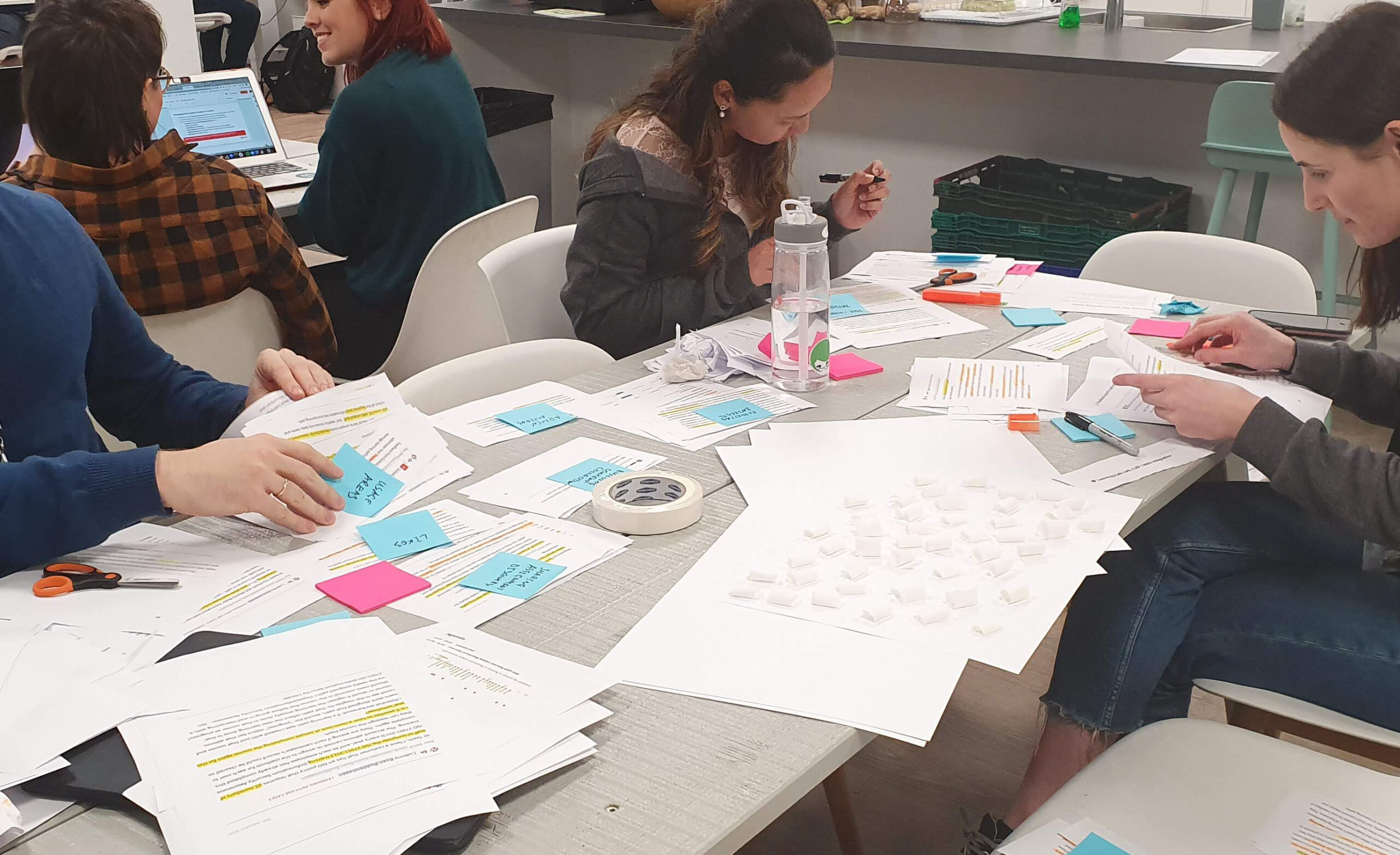
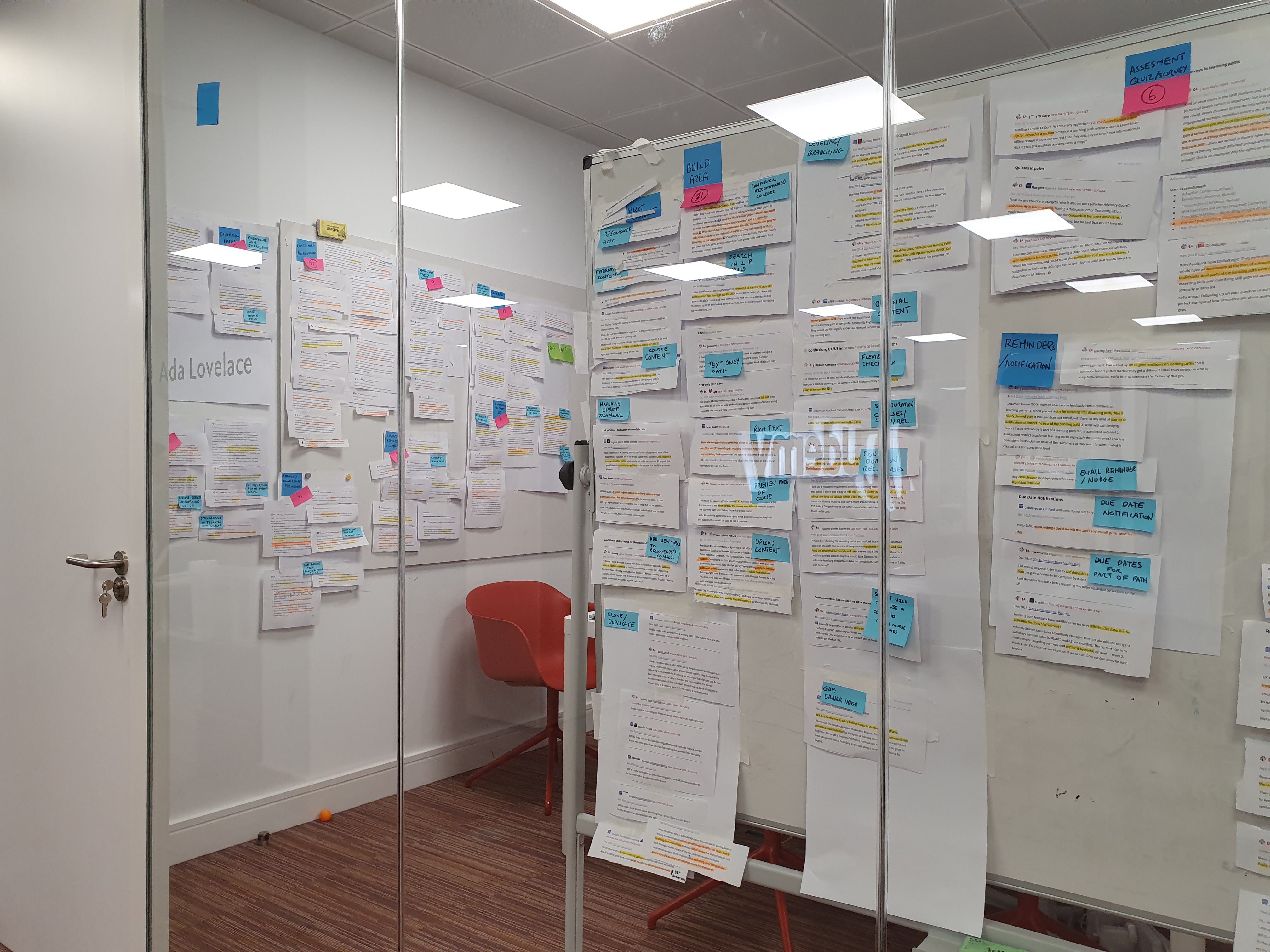
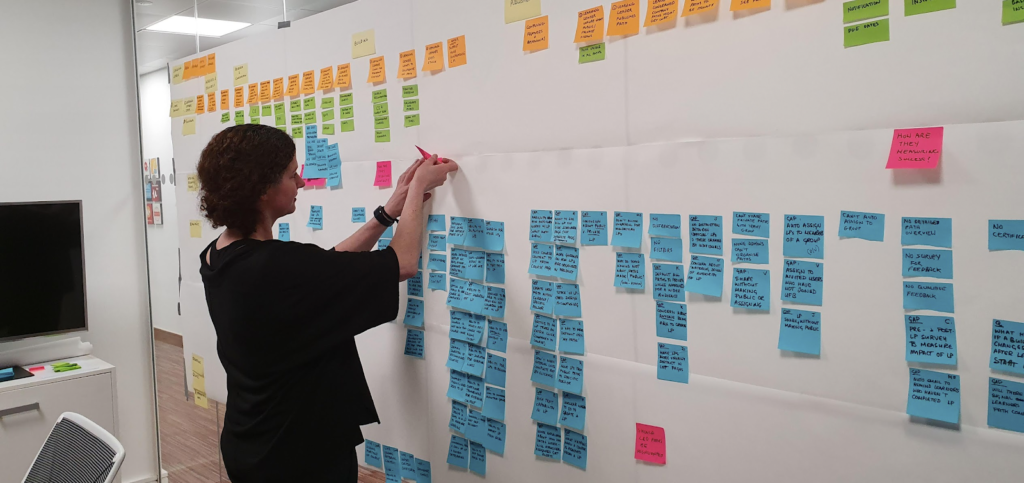
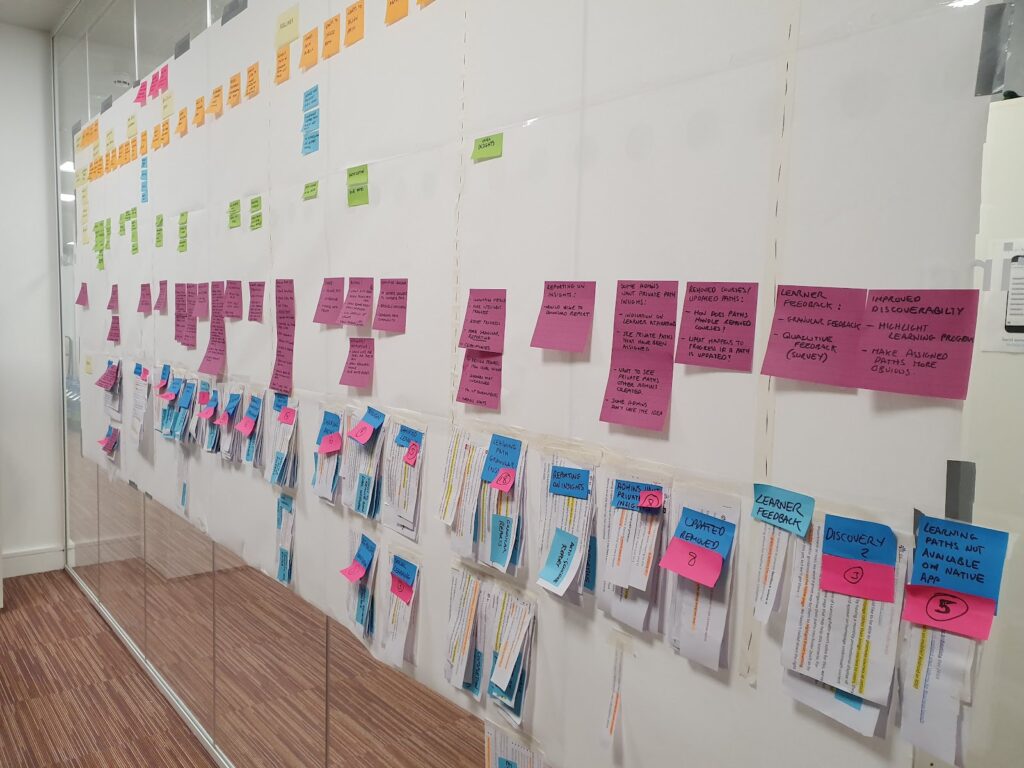
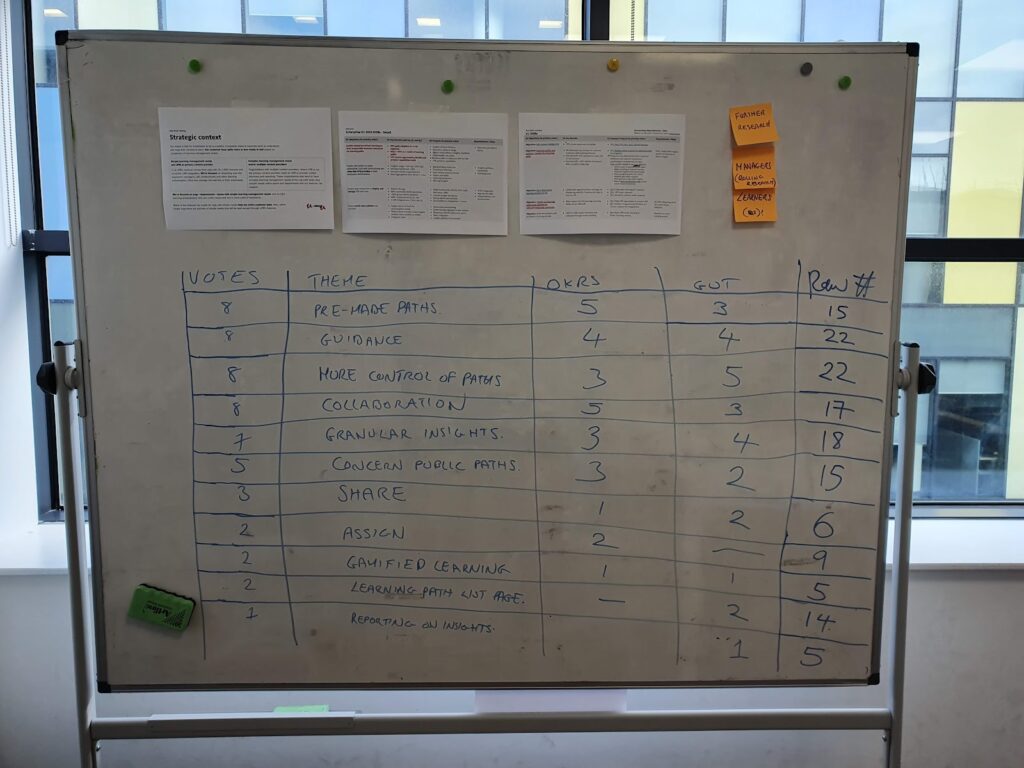
Following launch, I led a three-day cross-functional workshop to consolidate learnings, review customer feedback, and prioritise roadmap improvements.
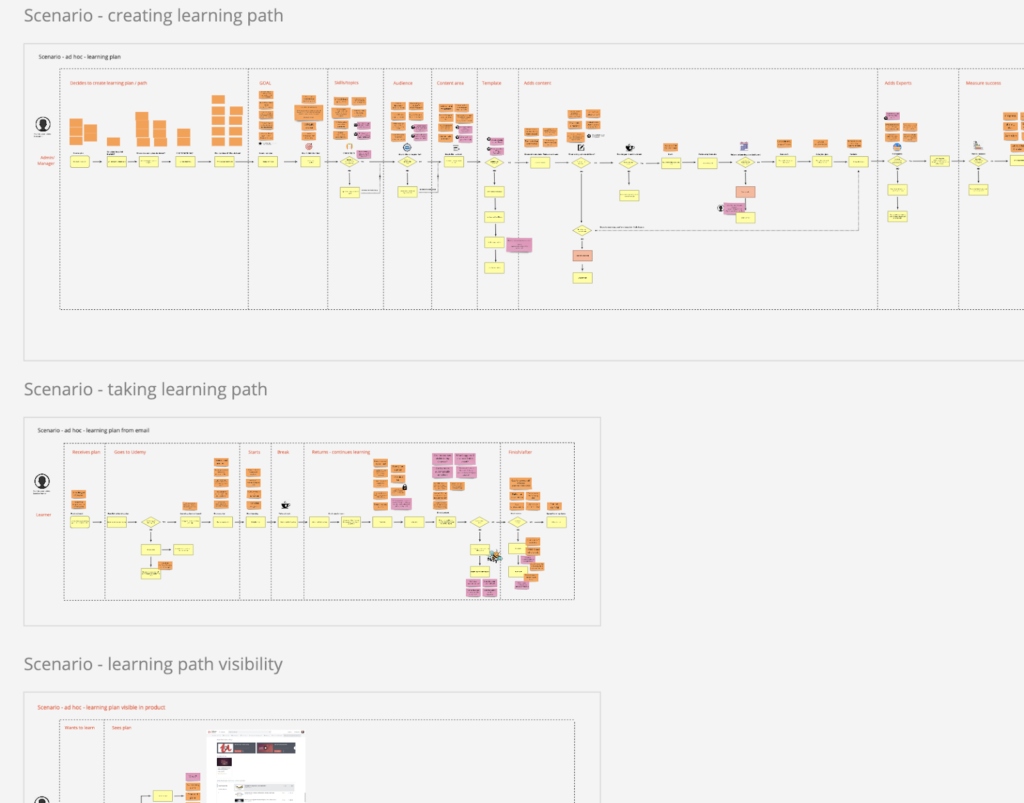
We gathered insights from Productboard, support channels, and interviews, then visualised them on a journey map of the Learning Path editor experience. Working with engineers, product managers, researchers, and customer success representatives, we synthesised pain points, themed insights, and ran a dot-voting exercise to prioritise next steps.
By aligning improvements with OKRs and technical feasibility, we established a clear roadmap for iteration and, more importantly, a repeatable model for evidence-based decision-making across teams.
Impact Summary
- Launched the first Learning Paths experience for Udemy Business.
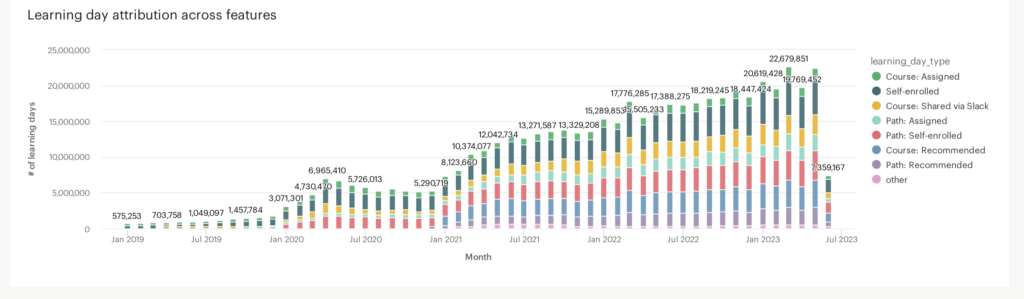
- Achieved 49% adoption within six months of release.
- Enabled organisations to curate and manage learning at scale.
- Introduced a model for rolling research and continuous validation adopted in later projects.
- Strengthened collaboration between design, product, engineering, and marketing.
The Learning Paths feature continues to be widely used, serving as a foundation for future product growth and customer engagement.
Learnings and Reflections
The ability to navigate ambiguity depends on creating alignment, communicating clearly, and grounding every decision in user insight.
Rolling research became a defining practice for the team, allowing us to learn continuously, reduce risk, and adapt quickly. Facilitating collaboration across disciplines helped ensure that design became the connective tissue holding direction, feasibility, and value together.
For me as a design leader, this project was a reminder that strategy lives in the intersection of clarity and collaboration. By connecting teams through shared understanding and evidence, design can accelerate progress and inspire confidence at every level of the organisation.
Support articles:
- Overview of the Learning path feature
- How to Create Your Learning Path
- How to Unassign Learning Paths
- How to Search for Learning Paths
- How to Add Multiple Editors in Learning Paths
- How to Add Portions of Courses Into a Learning Path
- How to Make a Learning Path Public or Private
- What Resources Can I Add in a Learning Path?
- Who Can Create a Learning Path?
- Why Has a Course Been Removed From a Learning Path?
- Link to digitised journey map board