Introduction
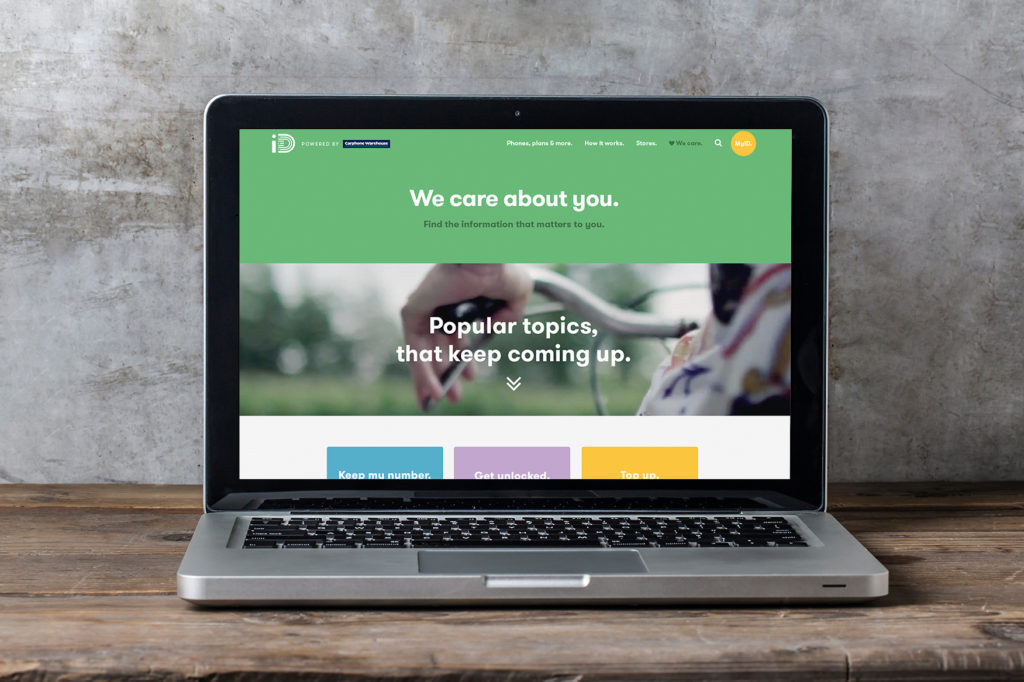
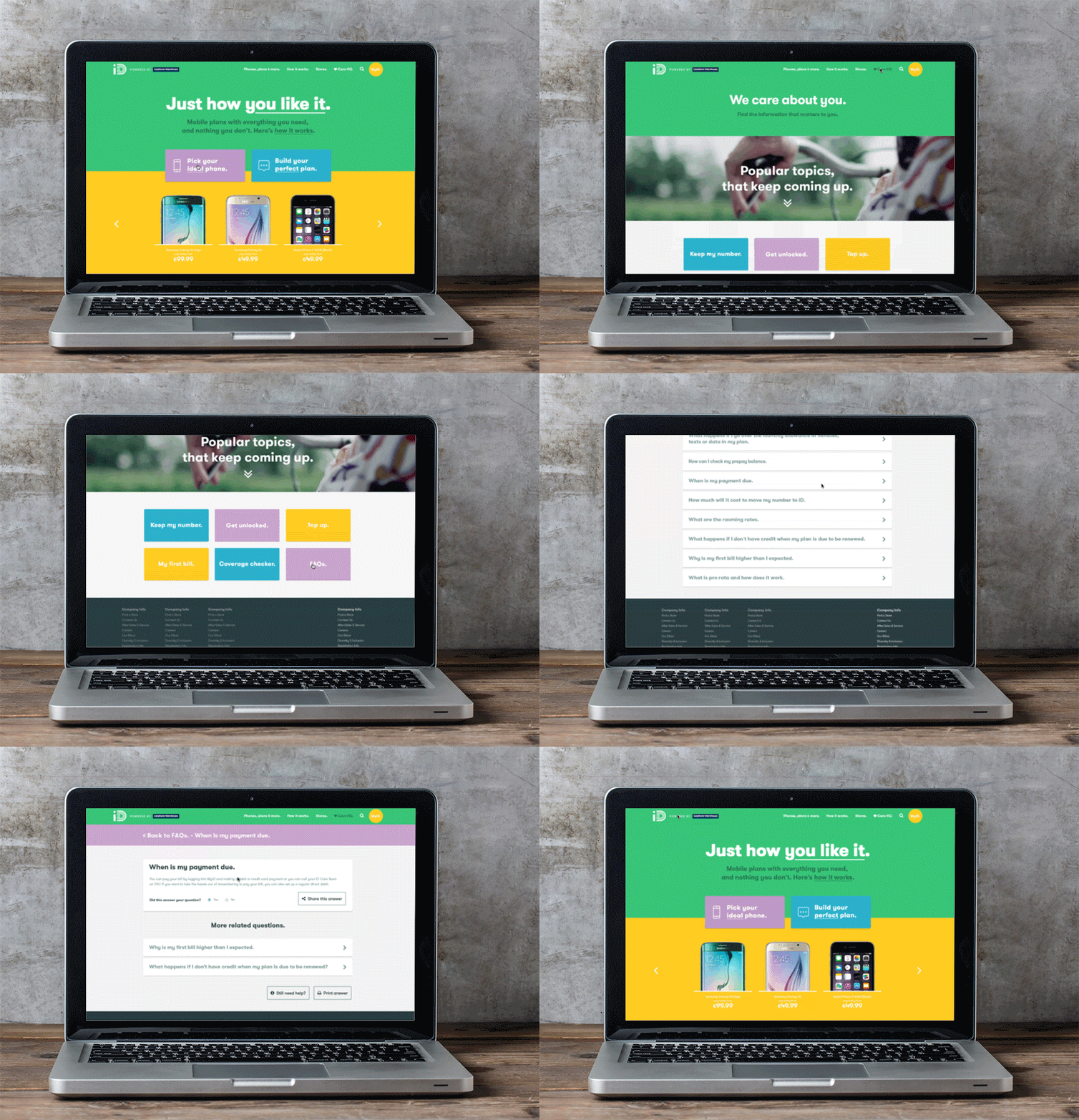
During my time with Continuum’s award-winning UX team, I led the design of the eCommerce and customer dashboard experiences for iDmobile, an innovative telecom company offering flexible, user-driven mobile plans.
The project was both a creative and strategic challenge: designing an adaptable digital ecosystem for a competitive telecom market while simplifying a complex billing and plan-management model for everyday users.
This case study reflects how thoughtful UX strategy, close cross-functional collaboration, and evidence-driven iteration led to a customer experience that not only met business goals but also earned industry recognition.
Context and Objectives
When the project began, iDmobile had ambitious goals:
- Build an online platform that allowed customers to create and manage fully personalised plans. This was a new concept at the time.
- Simplify billing and account management through an intuitive dashboard.
- Deliver a responsive, modern, and scalable design system that reflected their brand promise of flexibility and transparency.
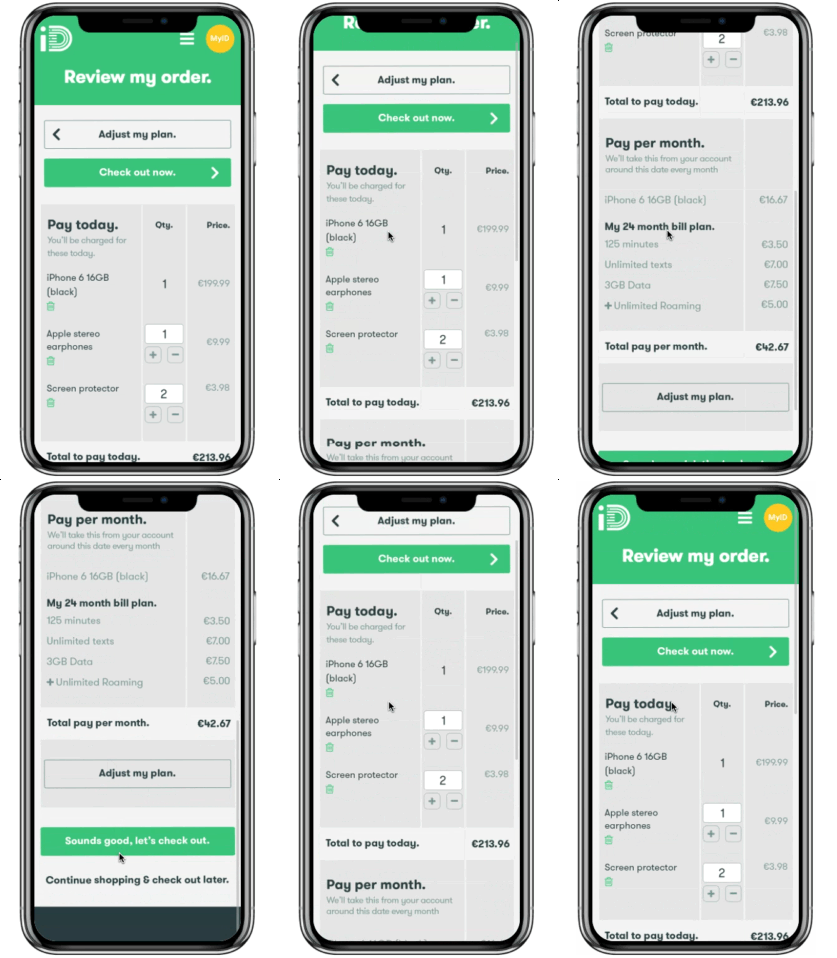
To achieve this, I worked across multiple tracks, leading UX design for the shopping journey, checkout flow, care area, and billing dashboard, while aligning stakeholders, developers, and designers around a unified experience vision.
Discovery and Research
A strong research foundation shaped the project from the outset.
I conducted:
- Stakeholder workshops to clarify business goals and technical constraints.
- Competitor and benchmark analysis to identify patterns in telecom eCommerce flows.
- Customer interviews to understand real-world frustrations around billing transparency and plan flexibility.
- On-site observational research to map how customers interacted with account tools and service plans.
These activities helped us define a shared understanding of the customer journey, from purchase to billing, and surface critical experience gaps.
One insight stood out: telecom users valued clarity over complexity. They wanted control and reassurance that they understood their plan, payments, and limits at a glance. This principle guided every design decision that followed.

Designing the Billing Dashboard
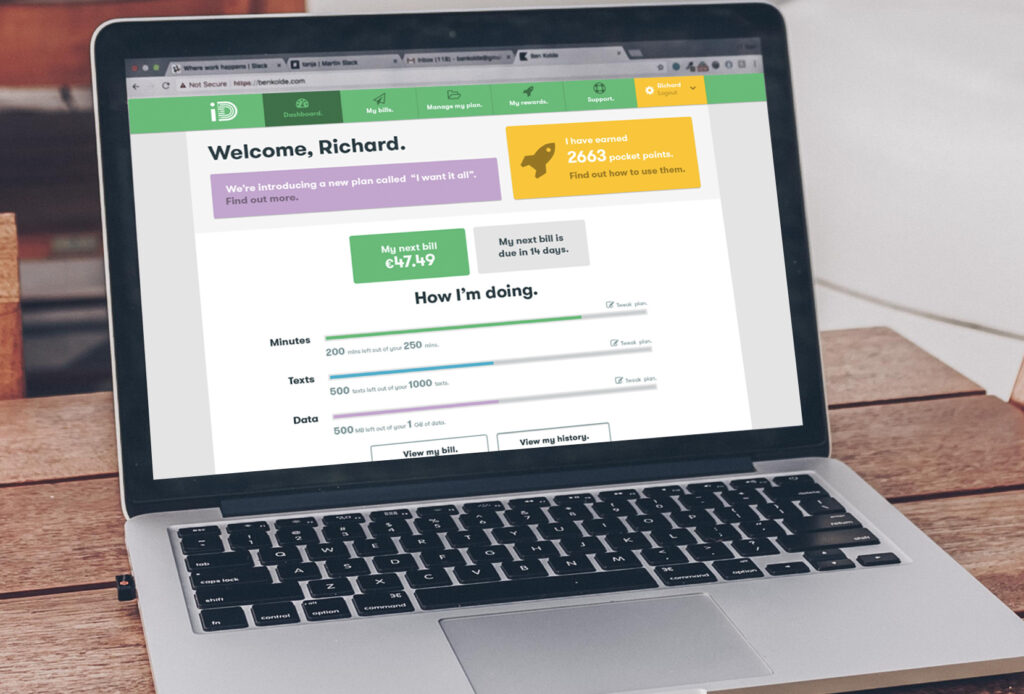
The billing dashboard was one of the most technically and strategically challenging areas. Customers struggled to understand overages, plan limits, and billing cycles, issues that drove high call volumes and dissatisfaction.
I led workshops with developers and stakeholders to co-create a feature matrix, determining what to include in phase one based on value, complexity, and technical feasibility. Using low-fidelity sketches and quick validation tests, I explored layout and flow options that clarified usage and billing at a glance.
User tests with prototypes revealed specific comprehension challenges around over-limit charges. Based on feedback, I redesigned the billing section to visualise plan limits more clearly and guide users toward proactive management actions.
This focus on clarity paid off, the redesign became one of the most well-received updates within the product ecosystem.
Testing, Iteration, and Delivery
Our process was built on rapid iteration.
- We conducted guerrilla and moderated usability tests across multiple stages.
- I synthesised feedback to identify behavioural patterns and refine the flow.
- Iterations were validated through InVision prototypes before moving to development.
- Detailed specifications and layer organisation ensured smooth handoff and maintainability for future updates.
Continuous testing gave the team confidence to make decisions quickly and stay grounded in real customer feedback, a hallmark of good design leadership in fast-moving environments.
Results and Recognition
The project culminated in a platform that successfully balanced user control, technical depth, and design simplicity.
Key outcomes:
- Winner of the Eir Spiders Award for excellence in digital design, recognition of the project’s innovation and execution quality.
- Improved checkout conversion and reduced drop-off rates through simplified step design.
- Increased user satisfaction with billing transparency and plan management.
- Strengthened cross-functional collaboration and adoption of structured UX practices.
Leadership Reflection
This project marked an early milestone in my evolution as a design leader.
It taught me that exceptional outcomes emerge from clarity, collaboration, and continuous iteration, and that design’s role is not only to craft experiences but to connect teams and perspectives around what customers truly need.