Introduction
Building on the foundation established in Part 1: Simplifying Account Management Complexity, this next phase focused on translating strategic clarity into measurable, customer-facing improvements.
Our Enterprise customers valued the flexibility of the account-management experience, but as adoption grew, so did complexity. Admins needed greater control, clearer hierarchy, and more efficient tools. My goal as design lead was to empower administrators, improve scalability, and strengthen trust while maintaining design quality and collaboration across a rapidly evolving team.
This case study highlights the initiatives that followed, each guided by research, cross-functional alignment, and a commitment to designing for both customer and business impact.
Empowering Administrators with Control
Role Permissions
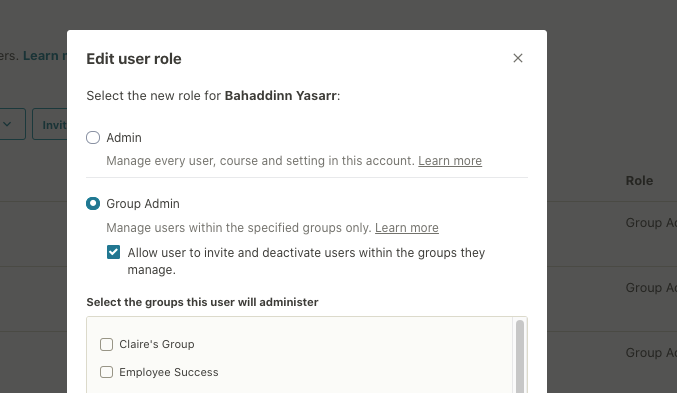
Admins wanted finer control over licenses and user management. We introduced an additional permission level for the Group Admin role, allowing organisation admins to delegate responsibility while maintaining oversight.
To protect privacy, Group Admins could view only their assigned groups. Within four months, 2,000 of 12,000 organisations activated the new permission, confirming its immediate value and usability.
Bulk Action Capabilities
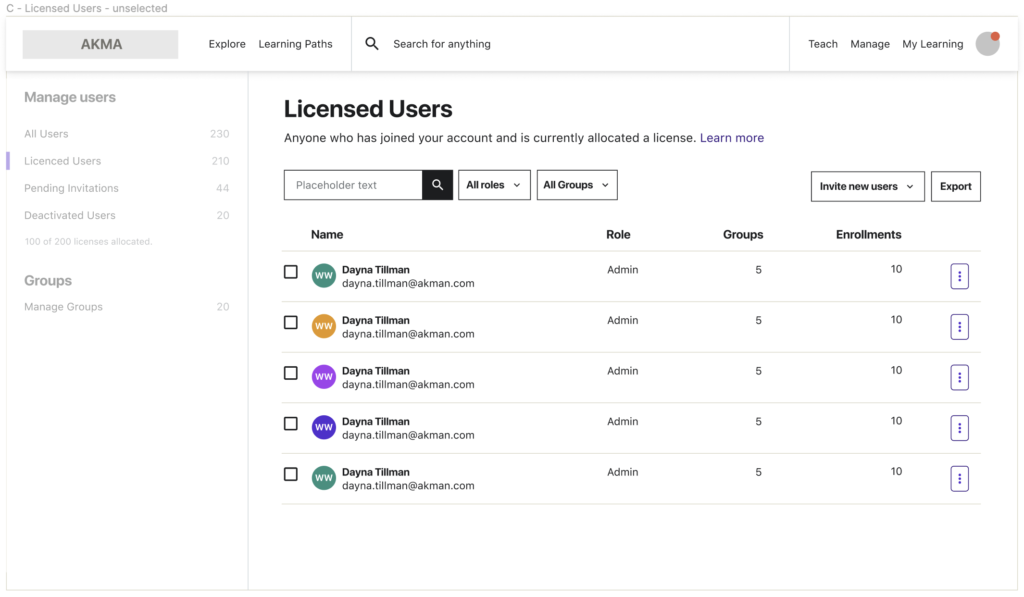
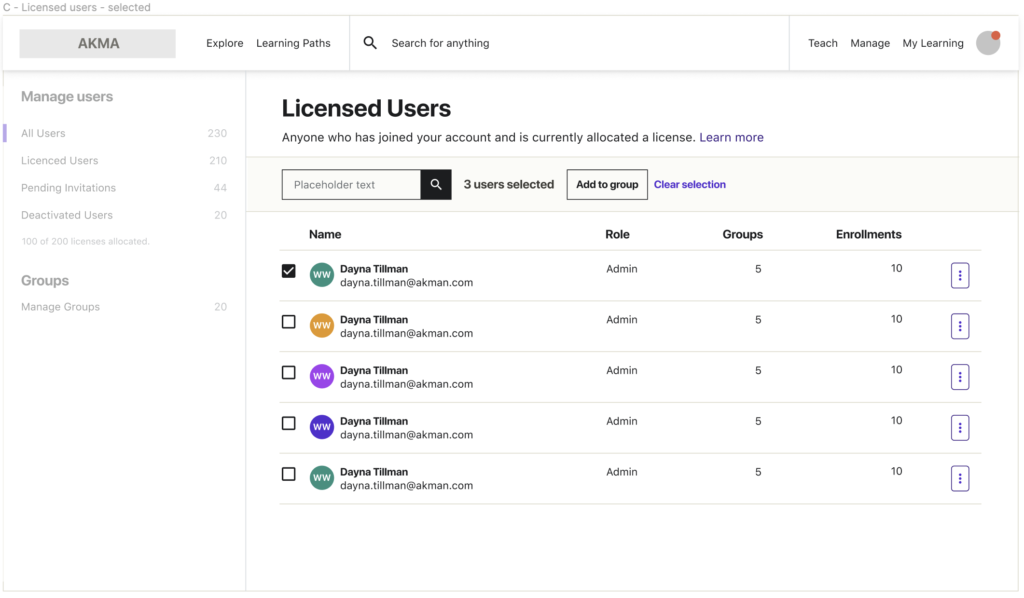
Another recurring pain point was the inability to manage users in bulk. Admins were spending significant time on repetitive manual actions.
We designed bulk-action functionality for adding or removing users, resending or canceling invites, and anonymising accounts. Alongside functional improvements, we refreshed the UI for responsiveness and clarity. Within three months, 5,386 organisations adopted the feature , a clear sign of increased efficiency and satisfaction.
Improving Organisation and Efficiency
Sections Hierarchy
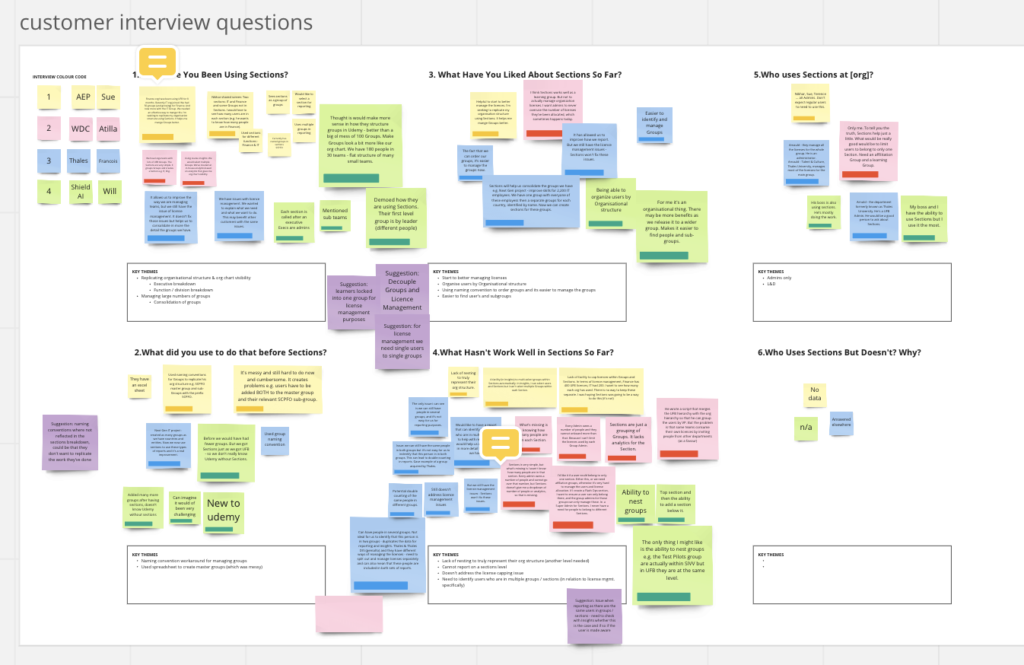
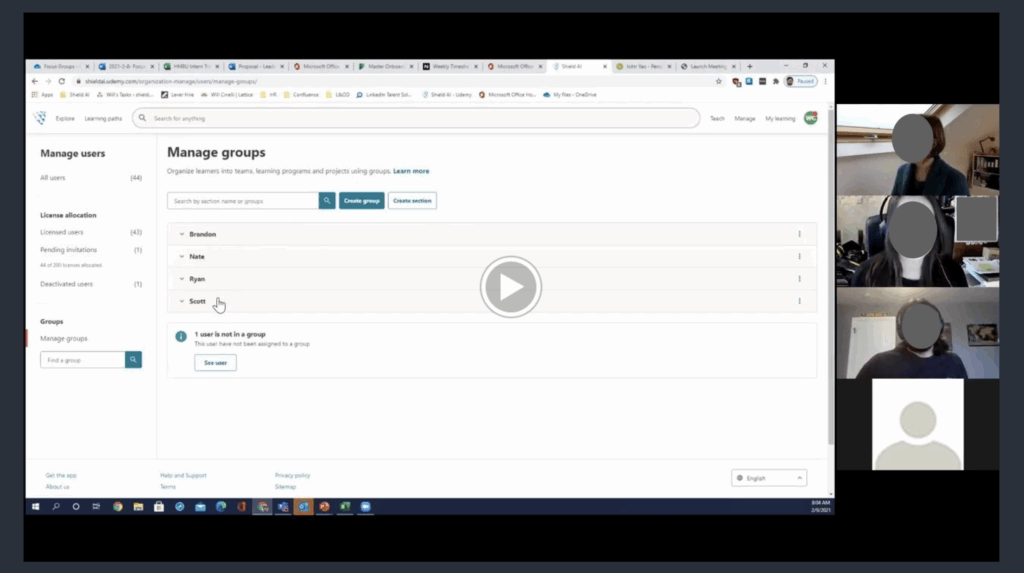
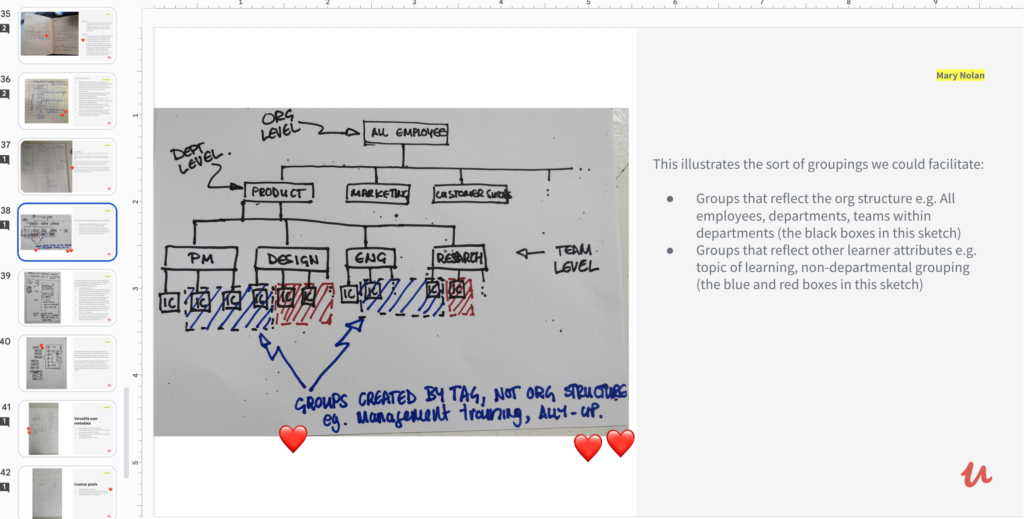
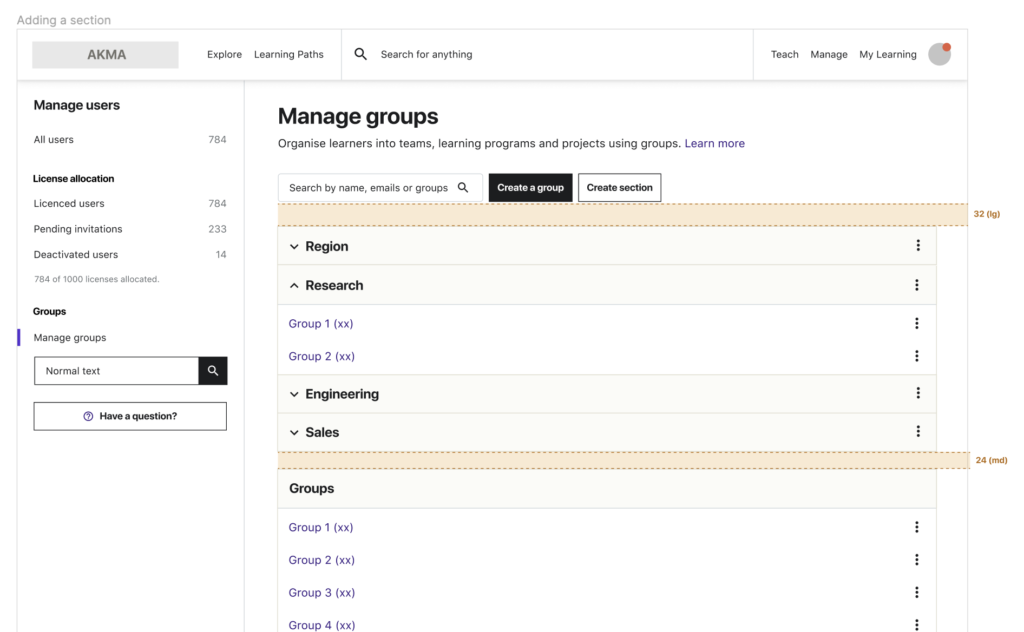
As enterprise clients scaled, they struggled to organise hundreds of groups logically. Through stakeholder workshops, ideation sessions, and customer interviews, I identified the need for a simple yet flexible hierarchy.
We introduced Sections, enabling admins to organise groups under custom categories for easier reporting and management. Adoption reached 16 percent among organisations with 100+ licenses in the first quarter, a strong early indicator that hierarchy improved operational efficiency.
Enhancing Trust and Security
Login Verification Process
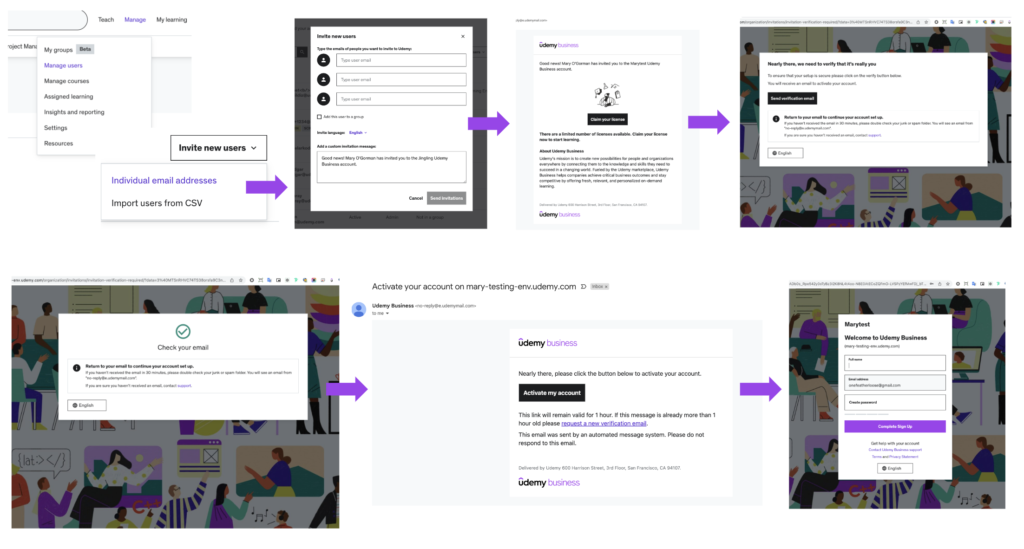
Security is a cornerstone of enterprise trust. To prevent expired or unauthorised invitations, we added an email-verification step requiring invitees to verify their identity via a time-limited link.
This improvement not only strengthened data protection but also simplified troubleshooting by automatically invalidating older, unused invitations, a small but critical enhancement for admins managing large user volumes.
Designing for Scale and Sustainability
License Allocation and Capping
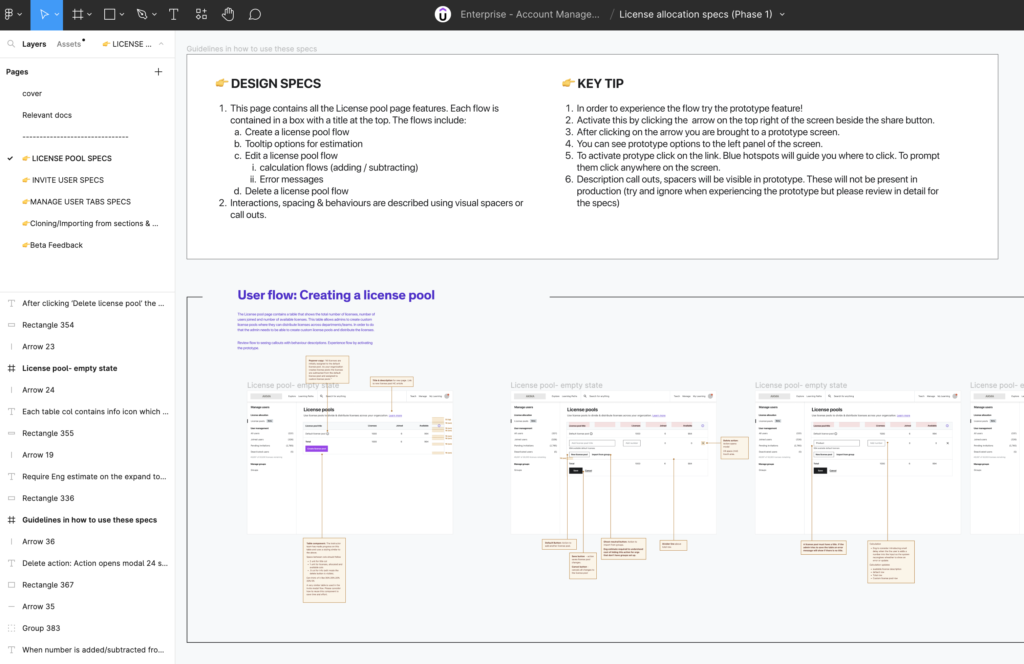
As organisations grew, fair license distribution became increasingly difficult. We explored a license-capping model that would allow allocation by cost centre and region, improving accountability and governance.
This initiative touched multiple areas, invite flows, group logic, license calculations, and UI scalability, and required close partnership with engineering. We ran benchmark research, mapped journeys, and iterated early flows while evaluating technical feasibility and edge cases.
Although implementation demanded service-level upgrades, the groundwork set the stage for long-term scalability. I coached a new designer through the next phase, ensuring continuity and design intent. The outcome: a simplified, more intuitive license experience that maintained organisational control without compromising usability.
Design Approach
Across all projects, our design practice followed a structured, iterative model:
- Research and benchmarking to identify opportunity areas.
- Ideation and co-design sessions with stakeholders and customers.
- Journey mapping and prototyping to align teams on desired outcomes.
- Continuous validation through interviews and feedback cycles.
This discipline allowed us to manage complexity, make informed trade-offs, and maintain velocity even as the product evolved.
Conclusion
Through focused, research-led design, we delivered tangible improvements with greater control for admins, streamlined organisation, enhanced security, and scalable license management.
Beyond the features themselves, this work demonstrated the power of design leadership in helping sustainable progress. By grounding decisions in insight, collaborating across disciplines, and mentoring the next generation of designers, I helped the team translate strategy into experience.
As a Design Leader, I carry these lessons forward: impactful design at scale depends not only on the quality of what we ship but on the clarity of how we lead, turning complexity into confidence for both customers and teams.